

NATO Summit 2025: Unprecedented Defense Spending Boost and Transatlantic Tensions
At the 2025 NATO Summit in The Hague, member nations commit to raising defense spending to 5% of GDP by 2035 amid unity concerns, with Trump and Rutte steering the agenda.

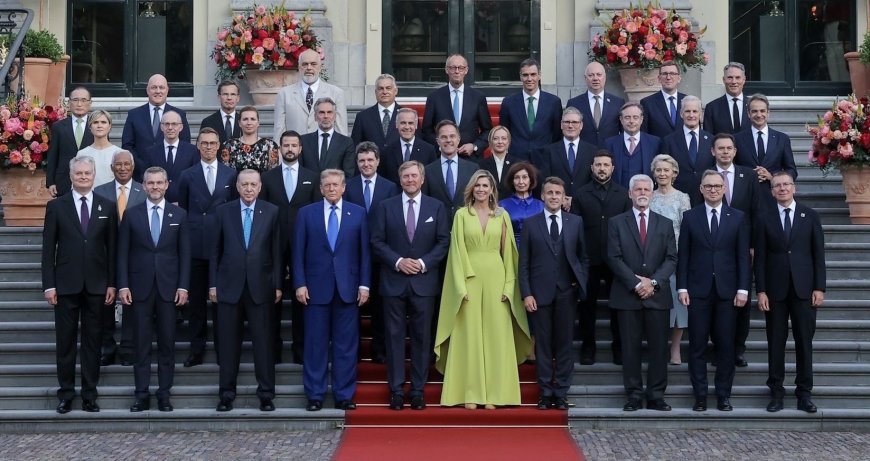
In a momentous development at the 2025 NATO Summit held June 24–25 in The Hague, alliance members pledged to raise defense and security spending to 5% of GDP by 2035—a historic shift aimed at strengthening Europe’s deterrence capacity amid escalating tensions with Russia. The change was hailed as a breakthrough by Secretary-General Mark Rutte and U.S. President Donald Trump, both of whom emphasized the importance of collective defense under Article 5.
The decision was not without controversy. Spain, Belgium, and Slovakia resisted the ambitious target, with Spain pointing out that its current contribution of 2.1% already matches its capability priorities. Trump underscored the urgency by warning of potential trade reprisals for countries that "drag their feet," while also reaffirming U.S. backing for Article 5 and pledging to consider additional Patriot missile shipments to Ukraine following discussions with President Zelenskyy.
European leaders stood firm in their support. UK Prime Minister Keir Starmer, France’s Emmanuel Macron, and Germany’s Friedrich Merz reinforced the alliance’s unity, acknowledging the historic nature of the defense commitment. Rutte, in his first summit as NATO chief, navigated U.S.–Europe dynamics deftly, balancing Trump’s interventionist pressure with continental concerns over budget allocations.
Security across The Hague was heavily fortified in anticipation of the summit, with road closures, airspace restrictions, and nearly 27,000 Dutch officers deployed under “Operation Orange Shield”—the most significant security operation in the city’s history.
This summit marks a pivotal step for NATO, combining long-term financial commitments, firm political signals across the Atlantic, and renewed attention to allied support for Ukraine. Yet, it also reveals underlying tensions over burden-sharing and the balance between defense and domestic spending—questions that will shape NATO’s trajectory over the next decade.
What's Your Reaction?
 Like
0
Like
0
 Dislike
0
Dislike
0
 Love
0
Love
0
 Funny
0
Funny
0
 Wow
0
Wow
0
 Sad
0
Sad
0
 Angry
0
Angry
0





)




Comments (0)